Friday, November 24, 2006

Culture or Institutions?

Very interesting article about Iraq. But it's also relevant to Georgia I think, in terms of transition economics and state building. Here are some quotes:

..........however, is that some of the institutions that clearly matter are indisputably cultural. Corruption, which eats away like acid at most development projects, is a lot easier to fight if your citizenry sees bribery as a moral outrage, rather than a convenient way to evade inconvenient rules. Keeping your girl children out of school, and sending the boys to religious schools that eschew math and science in favour of memorising religious texts, dramatically disimproves the prospects of competing economically in the modern world. And people whose cultures distrust foreigners, or any strangers outside the extended family, are unlikely to enter into the complex web of trust in strangers that supports a modern economy—or accept the legitimacy of a democratic government elected by millions of countrymen they have never met.


Wednesday, November 22, 2006

We - georgians

Polemical notes concerning certain

Social/psychological aspects of Georgian culture

Author: George Nizharadze

A society which cannot combine a fidelity to its own symbols with a freedom of revision of those symbols is bound to perish, whether of anarchy, or a slow atrophy of living, suffocated by useless phantoms.

Alfred N. Whitehead


The Area of Responsibility

Ethics has a well-known "golden rule": treat others the way you want to be treated. This had been formulated in one way or another by many; you can find it in the New Testament, in various proverbs, in the works of ancient Greeks, as well as those of Confucius. A follower of this rule must be considered a person of high integrity; however, from the psychological standpoint, there is an interesting detail: who should be considered "the others"? It would not have occurred to any ancient Greek, even one of the highest integrity, that moral norms also concerned slaves or barbarians. A noble knight, having given a promise to a lady, had no reservations about enticing a young peasant girl. Slaves, barbarians, peasants and other comparable segments of society have never been viewed as people, even formally.

From the earliest period of history, there has always been this division into "them" and "us." "We" are the social group (tribe, kin, nation, class, religion, party, age, professional association, racial unity) which a man identifies with, having a degree of responsibility before other members of the group. Meanwhile, "they" are the groups which are not concerned with the same behavioral norms that "we" use.

Certainly, a given person has the feeling of being a member of several "we" groups, some more important than others. These days, the most common and at the same time most numerous groups of identification are nation, state and language groups, although there is a tendency towards further expansion of the areas of identification (to include Western Europe, the Islamic world, the ecumenical movement and others). If we can speak about any moral progress on the part of the humanity, the broadening, albeit formally, of the "golden rule" may be considered one of its manifestations.

The existence of a global Georgian mentality is a fact. Such realities, traditions and cultural symbols as The Knight In the Panther's Skin, the particular style of raising a child, Queen Tamar and many others comprise the all-Georgia common property. The Motherland, Georgia, the Georgians - all these are the existing identifiers. These values have been actively affirmed in family life, as well as by means of information resources, the education system and works of art. However, observations show that these high values often have a declarative and rather abstract character. In reality, on the behavioral level, one Georgian does not necessarily treat another as an equal fellow member of the "we" group. There is a certain difference between what is said and what is done. In our unpublished survey, the question of "Do you or do you not love your Motherland?" was answered positively by practically 100% of the respondents. However, the question of "What kind of traits do you want to cultivate in your children?" the notion of "patriotism" appeared somewhere near the bottom...

There is the impression that to a large number of Georgians the notion of "Georgia" is at best a symbol of nature, cultural monuments and the customary lifestyle, but not of other Georgians. This is how it goes: my own interests (and those of my close relatives), as well as some monetary impulses, are above the interests of all others. I am in a good mood, so I took out my gun and here I am shooting at the ceiling, who should care?! I am against stealing in general, but if a man I know well has stolen something, I will spare no effort to protect him from being punished. One should defend the Motherland, but I will do my best to keep my son from the draft.

Sergi Danelia wrote, "A Georgian today ends wherever his last name ends, that is, a group of people connected to him through blood or friendly relations. Whoever is not our relative is not considered a human being. He is a stranger, and we don't have to love strangers". These lines were written in 1927, but as recent events prove, the situation has not changed essentially. Moreover, a tendency (especially among young people) has appeared to further narrow the "we" groups, turning them into the "me" groups, i.e. the groups which have individuals considering other members of the group as executors of their personal interests, while performing their duties regarding others only because that is required for the maintenance of their privileged status.

The difference between the two identification types, those of "us" and "me" regarding families has been demonstrated by a study done at American colleges. It turned out that students of Italian descent had lower grades than those of Jewish descent, although there was no intellectual difference. An additional study found out that Jewish students considered high grades a necessary prerequisite for their families' affection, while Italian students were certain their families would love them no matter what their academic or professional successes. What a familiar picture that is. Thus, in my opinion, the majority of the current (and not just the current) Georgian population has a rather narrow "area of responsibility." It covers primarily the circle of one's family, relatives and friends. The Motherland, meanwhile, is largely a declarative, abstract value, and has no influence on long-term behavior. However, it must also be noted that an impetuous abuse of this value (for instance, during the events in Abkhazia) does cause a certain reaction which is anything but weak. Still, even if provoked by a national insult, the impulse is rather short-lasting, supported by momentary emotions, and is not likely to turn into an organized, purposeful lasting action. The narrow frame of the area of responsibility, as well as lack of civil consciousness, determine the atrophy of perception of societal problems (whether that is energy conservation, pollution of the environment, firearms registration, or any other aspect that concerns everyone). As a result, society and each individual member both suffer.

The aforesaid does not imply that an "average" Georgian could not care less about his compatriots. The peculiarity of Georgian culture is that it also consists of individuals, albeit with a narrow area of responsibility, who nonetheless feel comfortable precisely in the Georgian environment. This was noted by Guram Asatiani, "It is striking how a Georgian is usually at odds primarily with another Georgian. However, the two Georgians cannot live without each other, inasmuch they long to compete only with one another".

In my opinion, to explain this paradox, one should look not at the peculiarity of the Georgian character, but rather at the specifics of the culture. The affluence acquired through the support of the "we" or "me" groups requires some manifestation. Let the neighbors, remote relatives, home-folks, guests or simply the passerby notice and appreciate how generous, courageous, influential, eloquent, rich or smart "our guy" is. If that makes them jealous, so be it.

Hence a typical picture: a rich village is full of palatial houses, while the "central territory," such as the main road, is in utterly decrepit condition. Or the yards and lobbies of apartment buildings, not to mention public restrooms are turned into garbage dumps.

In 1904, in St. Petersburg, a book entitled The Caucasus was published. Its author, one E. Velichko, had served in Georgia for a long period of time. Velichko was what we call a dyed-in-the-wool imperialist chauvinist, holding anti-Semitic and especially anti-Armenian principles. However, he had fine feelings about the Georgians, albeit a bit culturally patronizing. He called Georgians "my brothers", and considered them the most solid support for the Russian Empire in the Caucasus, due to their exceptional loyalty to the Russian Czar. His views of the negative sides of the Georgian character are all the more valuable since they do not contain any obtrusive antipathy. Velichko cites this example, which he claims is typical.

One Georgian prince spent his time in debauchery and luxury, and once killed a man in a fight. He was subsequently exiled to a remote Russian district, where he earned everyone's affection and respect with his honesty and hard work. He introduced silk-worm breeding and gardening to the region, and even became a governor's agricultural advisor. However, as soon as he came back to Georgia, he indulged in his former activities, and was killed in the next fight.

There are so many such examples that one can speak of a certain pattern. We know of a great number of individuals who, being in an alien cultural environment, gained international fame and authority in the spheres of art or politics, but became victims of petty ambitiousness and scheming once back in their native lands. It is not by chance that, after Georgi the Shining, our country has not had any politician or leader able to realize any positive long-term programme; in fact, has anyone (with the exception of Ilia Chavchavadze) ever had one?

It is the cultural environment, the system of declared and real values and accepted norms of behavior that determine the national character. Whoever does not cross the boundaries of commonly accepted norms is successful. As Erich Fromm notes, social character is formed according to cultural demands; the latter, however, do not always coincide with the demands of real existence. The power of a culture is determined by its dynamism, i.e. by the degree and speed to and with which it can produce new values in accordance with changing conditions.

Velichko also wrote that the life of Georgian society, especially that of its higher classes, was growing progressively worse. The mode of life was being destroyed due to the contradictions between the historically developed character and the new social and economic conditions. It is not that easy to change your way of life.

Whatever is meant by the "new social and economic conditions", this observation is correct, even from a cultural standpoint. The Georgian nobility, with its leaning towards debauchery, with narrow temporal horizons and areas of responsibility, its arrogance, wastefulness and remnants of a heraldic code and infantile individualism, had no future. If the Georgian people could be saved at all, it could have only been accomplished by following the path propagated by Ilia Chavchavadze, that of forming the national consciousness and relying upon honest workers. However, the wheel of history started revolving in a completely different direction, and Georgian culture produced a certain model of adaptation to the Soviet regime. It may sound tragic and comic at the same time, but it was the same infantile feudalistic mentality and the aforementioned behavioral norms accepted by a substantial part of the population, that befitted Soviet reality, especially in the post-Stalin period.

Georgia and the Soviet Regime

The Bolshevik Revolution used, subsequently making it a part of societal life, some tendencies characteristic of Russian culture, such as collectivism and aggressive anti-individualism, a purely negative outlook on the concept of wealth, tradition of strong state power and a messianic sense. However, all of that was done under the aegis of Marxism, which, at least in form, was very much concurrent with Western European thinking and the Protestant ethic. The categories that Marxists operated within, such as "productivity of labour", "surplus value", "class struggle" and "societal progress", were strange and alien to the majority of the Russian imperial population. It is clear that in alien cultural conditions these terms only preserved their names, while their content changed dramatically. Such notions as democracy, efficiency of productivity, profitability, political party, service and many others, had completely different meanings in the West and the Communist East.

Very soon after, the first victim of ideological declarations appeared: the value most alien to the Russian cultural environment: efficiency of productivity. It was substituted with various surrogates aimed at producing the illusion of efficiency, such as giant yet unprofitable plants, quantitative indexes, manipulation of figures, propagandist talk, banal lies concerning "surpassing the five-year plan objectives", "counter plans" and "Socialist competitions", etc. In the early Soviet years, a certain role was played by mass enthusiasm, determined by the illusion that the USSR was at the vanguard of history; however, it turned out to be a poor guarantor of economic power. Meanwhile, the economic foundation of the Soviet Empire was determined by the colossal natural resources of the gigantic country (incidentally, the exhaustion of these supposedly inexhaustible natural resources determined the need for perestroika. We know the results, although not quite all of them yet).

Once again, in line with Marxism, the productivity of the "workers of intellectual labour" was accepted as a measure of "progress". The "goal established by the Party" was reached using purely Soviet methods. There was a massive increase in the numbers of writers, scholars and people with higher education in general. These "Soviet intellectuals" were not required to demonstrate any commercial success or produce any high-quality works; rather, they were required to support and glorify the regime. Since under Soviet conditions it was a lot easier to simulate intellectual and creative rather than physical labour. As such, the "rules of the game" offered by the regime attracted a vast number of people who with minimal effort and equally minimal levels of responsibility could provide themselves with a fairly comfortable standard of living.

The national problem was "solved" in a similar fashion. Officially, the peoples within the USSR were considered to be equally "progressive" and "socialist" (although some cultural distinctions were allowed, producing a large number of folk ensembles). Hence the creation of institutions alien to the particular cultural environment, the' establishment of academies, universities, industrial giants, film studios, etc. All this required substantial financial resources while only serving prestige. Equivalence of degrees, ranks and titles meant that a dissertation written and presented in, say, Dushanbe was considered equal to that written and presented in Tallinn or Moscow, even though the scholarly value usually differed considerably.

As a result of these and comparable processes, the USSR became a closed system, possessing all the formal properties of a developed Western-style industrial state; however, it was nothing more than a game of "progress", a game taken seriously by the "players" themselves. The Soviet state could be compared to a vehicle, or rather an armoured vehicle, which looked just like a real one but did not run. It needed horses to move from one place to another.

This then is a schematic portrait of the social/cultural environment in which the people, united into a "family of brothers", had 10exist, and which required some adaptation. The adaptation was so specific that, in my opinion, it would be useful to draw a parallel with some selected laws of biological evolution. In natural conditions, a species is more or less adapts to existing ecological factors, which is one of the results of long-term evolution. However, artificial selection exists, which involves a man creating a new species with a utilitarian or decorative goal in mind, producing a certain desired effect, such as an increase in milking capacity, weight, difference in colour, etc. The species' qualities required for existing in natural conditions are lost, and thus a new artificially created species is almost always doomed once returned to the natural environment.

In my view, Georgia developed a certain model of adapting to the Soviet regime earlier that other peoples of the USSR, one determined by certain historic properties of the national character. However, a relatively chance factor also played a large role: I am speaking of Stalin's Georgian ancestry.

I have already mentioned one of the qualities of Georgian culture, that of loyalty to a remote power, and a constant struggle or competition for gaining some, however little power at local level. It is not surprising that a compatriot in the position of remote ruler had a strong influence on Georgian consciousness, especially considering that the few existing carriers of healthy national ideas had been destroyed or exiled. This ruler, who enjoyed unprecedented power and authority, was quite naturally turned into the symbol of national identification (a simple mechanism: the "father of the peoples" is Georgian, you and I are, too, which means we reflect his glory."). This was enhanced by inner curtsies: a Georgian was among the people who raised the victorious flag over the Reichstag, Soviet films showed extremely positive images of Georgians... All this has increased the traditional Georgian hypertrophied sense of honour and dominance, not on the individual but on the collective "we" level. Besides, worshiping Stalin in Georgia was enhanced by another circumstance.

Having analyzed a very interesting myth about Amirani, Grigol Robakidze concluded that one of the leading qualities of the Georgian soul was willfulness; Amirani was said to be the personification of that quality. This is a very profound observation. Willfulness, which is the prevalence of one's wishes over commonly accepted norms of behavior (and, consequently, a nihilistic approach to lawfulness) is a substantial property of the Georgian character. Willfulness is also a real and meaningful value of Georgian culture'; therefore, the most "willful" individuals enjoy obvious piety in the mass consciousness, even if they have caused great disasters in the lives of numerous people. This is a cause for the concealed sympathy for the traitor, murderer and rapist Zurab Eristavi, which surface's in folk poems. This is also a partial explanation for the phenomenon of Stalin's personality cult.

Stalin was not just loved despite destroying millions of people he was loved because he personified the most extreme case of willfulness, free of any restrictions. While this infantile mechanism of a charismatic leader's cult was to various degrees characteristic of the whole "Soviet people", it had a special, deeper resonance in Georgia.

The phenomenon of Stalin, and the Georgian ancestry of the "father of the peoples" developed, recreated and enhanced two important tendencies in Georgian society: that of the cult of unrestricted power, of "willfulness" and also that of the sense of individual and group domination, which served as a foundation for the Georgian model of adaptation to the Soviet regime. It only started forming after Stalin's death. During the period of his rule, unifying efforts were so strong that the specific properties of the culture and National character had not received a chance to form into a system. This only became possible after Stalin's death, and, in my opinion, happened in Georgia earlier than anywhere else; the impulse came from the tragic events of March, 1956.

Stalin was dead. Following a brief period of confusion, Khrushtchov rises to the throne (the same Khrushchev the "great leader" had been known to hit on the head with his pipe, and make dance around). This was enough to sway the authority of the leader and the regime in the eyes of the Georgians. After all, in a totalitarian slate the political system is firmly connected to the image of the leader; in Georgia, meanwhile, positions and social roles are traditionally personified. Therefore, we seemed to like the regime inasmuch it was linked to the name of Stalin.

However, Nikita Sergeevich [Khrushchev] suddenly showed some teeth and noisily threw the "father of the peoples" off the pedestal. This circumstance considerably sped up the process of alienation from official Soviet ideology and values in Georgia.

It is remarkable that mass consciousness in Russia developed in a fundamentally different direction. There, a belief was spread (even among the most refined intellectuals) that Stalin was personally responsible for all the tragedies, due to his "perverted" interpretation of Marxism, while the Socialist path itself was considered to be absolutely right, as long as "Leninist norms" were restored. This signifies that for the Russians, the Soviet version of socialism had become an important component of the national identity. This is partly true today as well.

It was precisely the motive of defending a symbol of national identity that was responsible for the March unrest in Georgia. This symbol had turned out to be powerful enough for the first serious act of protest in Soviet history to occur. However, the turmoil resulted in a terrible tragedy. The system clearly demonstrated that any attempt to influence official policy-making or the ideological sphere was doomed. The Georgians learned their lesson well; perhaps even too well. The aforementioned traditional Georgian type of relationship to power was restored: the 10yaVindifferent view of remote power structures, and (within the suggested "rules of the game") concern about one's own self and the narrow "we" group, was declared a "national endeavour".

Meanwhile, the "rules of the game" changed considerably after Stalin's death, primarily because the repressive organs had lost their power, and the nomenclature, in turn, gained it. The state security organs had certainly preserved theirs; but the slave labour of the political prisoner and "prophylactic" acts of repression were things of the past. The "Iron Curtain" was somewhat raised as well; standards of living were slowly improving (mainly due to extensive housing construction). Fear, typical of Stalin's time, was being replaced by caution. The regime has preserved two pillars of the system: ideology and politics, which mere mortals were denied access to. A Soviet citizen was given a small degree of daily freedom, a small social space which the state did not usually invade (although it reserved the right to do so if need be). The citizen and the state signed an unwritten agreement: the state would not invade the citizen's personal life, and pretend not to notice his obvious violations of official laws, while the citizen, in turn, would not mess with ideology and politics. This "agreement" determined the existence of the Soviet state for three decades, and these were the "rules of the game" the Georgians understood at once. Starting in the 60s, outside Georgia a particular stereotype of a Georgian is formed, that of a moneybags, a tradesman, a profiteer.

This stereotype signified that Georgia was entering a new phase of adapting to the new Soviet regime. Contributing to the development of the so-called black market economy in Georgia was an important cultural property. The thing was, the implementation of the above "agreement" was only possible through informal contacts. We are aware that the informal "we" and "me" group contacts (friendship, kin...) had a special meaning in the Georgian culture.

Some may think that the formation of the black market economy signified the installation of some capitalistic elements. That is not so. The Soviet black market economy was a child of the Soviet deficit economy. The major regulator of the market, competition, was absolutely alien to the Soviet economy. Therefore, a "Soviet capitalist", or a schemer, lacked all the qualities characteristic of a Western businessman, by virtue of excluding the notion of "honest business". Due to the fact that any commercial activity was unlawful, every man involved in it automatically fell into the category of "dishonest". And whoever is officially considered to be in that category, even artificially (artificially, since the Soviet regime had forbidden one of the most natural spheres of human activity, that of commerce), will be free to make more serious moral compromises in the future.

Besides, the old negative, "feudal" notion of commerce in Georgia, the belief that a "merchant" is a liar and cheater by default, had by definition determined the attraction of people of dubious morals to that sphere. In both Russian and Georgian culture, dishonesty is a critical component of a merchant's role. Sociology tells us that the social role itself dictates behavioural norms to its carrier.

The misfortune was that such activity was officially unlawful, but was unofficially allowed. Therefore, any respect for the law was gradually being lost, while the principle which read "if it is not allowed but I really want it, it is allowed" was being born. On the other hand, society started living in peace with other illegal actions, such as theft, bribery, etc. It is not surprising that the black market economy soon spread all over the place, and started to steal from its own citizens, along with appropriating some of the nation's wealth. There was practically no societal sphere left free of the tentacles of corruption, theft and cheating.

At once, Bolshevism had destroyed a century-old system of regulation of societal life. All the values (good and bad alike, regardless of what we mean by those terms) which in another society would provide an individual with an opportunity to reach a high social status had been rejected. Among those values were talent, diligence, wealth, ancestry, enterprise and physical appearance. In their place, a single value was installed, that of loyalty (or rather a Soviet version thereof), which was essential for acquiring any social status. In the post-Stalin period, with a certain complication of societal life, other values appeared alongside loyalty: position, money, a circle of influential friends and relatives. All this was intertwined, but it was possible to make distinctions. As far as talent, diligence and professionalism go, their "price" had dropped even more considerably.

The post-Stalin reality, with all its irrationality and absurdity, declarative commitments and unwritten laws proved to be fertile soil for many tendencies and potentials characteristic of Georgian culture. We can name a few: hospitality, competence in personal interrelations, demonstration of dignity and domination, the primacy of "me" over law and order, the strength of "we" groups, egocentrism, superficial effects, alienated loyalty to remote power structures, etc.

One important circumstance has to be emphasized. The tendencies characteristic of the Georgian style serve as adaptation mechanisms, developed in the course of recurring wars, chaos and uncertain future. Poverty had always been their companion. To be more precise, the system of adaptation mechanisms and values born in Georgian culture was economically helpless, deprived of prosperity as a value of its own (in cultures which had developed such value, there is a corresponding attitude towards money, work and time): wealth had to be spent, the sooner the better, since it could be taken away the next day. Thus, we have not developed any behavioural or mental instincts directed at saving money.

However, in the post-Stalin period a unique situation was formed, whereby in the conditions of a "feudalistic" lifestyle, and in large part due to it, it became possible to gain relatively stable social well-being, and amass considerable (albeit unlawful) wealth.

Starting in the '60s, the hole in the "Iron Curtain" started delivering Western goods of a more or less fine quality. There was also the onset of Soviet production of "civilized" goods directed at individual consumers: motor vehicles, refrigerators, furniture, television sets... Housing construction was growing. In Georgia, all that caused what we would call a consumer boom. It was Erich Fromm who noted that consumer psychology was especially strong in Socialist countries where deficit was typical and ethical mechanisms of regulating the process of consumption were not present. The system of informal connections was very effective under Soviet conditions for all kinds of "procurements", "arrangements", gaining money, positions and privileges. It turned out that a person who had a friend or relative in any state institution, from a supermarket to a Ministry or the Central Committee, was a priori more privileged, compared to "others". But the "others" wanted to live, too! Therefore, money, this universal equivalent of connections, became a compensating device. The results were quick, as many sections of the population started "making money".

It is notable that the average citizen was especially annoyed (due to everyday contact) by the "deceitful behaviour" of the workers in service industries, such as store clerks, taxi drivers and waiters, as well as peasants selling goods in the market. No one considered that people of that category could only use money (and not friends or positions) to receive health care, get their children out of the draft, communicate with the law enforcement agencies or buy cars.

Eventually, the heaviest oppression was felt by an honest hardworking person, who had neither money nor an important position or influential friends (or considered it undignified to address them), who attempted to live off his own labour, but found himself at the bottom of the societal pyramid. He became the embodiment of weakness and stupidity; moreover, he had to pay his "tribute" to the "powerful", which became an almost universal rule of living.

In a word, Georgian culture could adapt wonderfully to the totalitarian Soviet reality. Those tendencies which worked in the given social/cultural environment were developed and enhanced; however, as demonstrated by the period following the collapse of the Soviet empire, they turned out to be major obstacles for existing in an independent political/social/economic organism, to say nothing of liberal democracy.

The law as a category of jurisprudence had never been too popular in Georgia. The aforementioned Georgian willfulness, as well as the powerful influence of Asian despotism, had annulled the law as a norm placed above the will of any individual. Soviet law, it can be said, legalized lawlessness. Constitutions and civil codes were being written, international agreements signed, but that was done for the sake of putting on a civilized "face". The Party and so-called "power" structures were above any law. That was further enhanced by the aforementioned unwritten agreement. Clearly, in such conditions it would be of no use to speak of any legal consciousness; therefore, in the Georgian environment, the attitude towards the law assumed a specific form: the law is a highly annoying thing which power structures use to limit my self-interest, my "willfulness".

The law therefore must be considered only to the degree that it is represented by the power and force behind it. As soon as that power weakens, becomes careless, foolish or merciful, the law turns to ashes and nothing restrains "willfulness" any longer (we are currently witnessing this). On the other hand, the law holds no value for a representative of any law enforcement agency. The most important thing for him is to catch a careless criminal, to thus serve his own self-interest (that of money, career, etc.). Thus, the major goal is not to reduce crime, but to catch an unlucky criminal – a gamble, that is.

Let us recall the campaign which ten years ago tried to emphasize the use of seatbelts in motor vehicles. The drivers assumed that it was an infringement of their own freedom in their own vehicles. The highway police, on the other hand, received a new source of income, hunted the "unattached" drivers down, fined them and released them without attaching the seatbelt. I recall a remark by one officer, who had noticed a voluntarily "attached" driver: "What's wrong with you? Are you grudging five roubles?!" However, a compromise was soon found: on seeing an officer, the driver threw his seatbelt across his chest like some sign of honour, and having gone by for some two hundred metres, freed himself from the "attachment". However, the most important thing is that no one was interested in the seatbelt's actual purpose, which is safety of the driver and passengers.

One can say that the law, one of the basic values of the civilized world, came to us "twice broken". In the environment of Russian culture, it had been bent according to the will of the ruling class, while in Georgia, the ruling class was topped by the local regulator of social life, the system of informal contacts, followed by money.

This "double metamorphosis" occurred with many Western values and social institutions. The institution of higher education also lost its primary function, that of nurturing qualified experts. However, it gained other functions, such as prestige, draft exemption or the opportunity for students to live separately from their parents. Such absurd phenomena as "protected" test-taking and the selling of diplomas, to say nothing of the admissions hysteria, have become customary. The results: formally, Georgia occupies one of the highest positions in the world as far as the percentage of formally educated experts goes. In reality, the level of education and qualifications here is extremely low.

It is clear that in such a social/cultural environment many values were doomed to perish. We have almost abandoned elementary professional ethics, responsibility for our production and pride in a job well done.

As always happens, changes in the value system and the emergence of new priorities, have found their expression in the language. Such formerly unknown expressions have emerged as "to push through", "his man" and so forth. However, perhaps the most expressive word, reflecting like a mirror the style and mood of our society, is "to swindle".

In a country where a relatively normal life is impossible without breaking the law and oppressing your fellow countrymen, where the government promotes the above activities inasmuch it lives according to the same norms, "swindling" becomes a rule for living, which is absolutely understandable, even somewhat justified. However, our misfortune is that the late totalitarian style of living has never been radically changed even in the current situation. At least so far... We seem to have run ahead of our narration.

At the beginning of the nineteenth century, N. Karamzin wrote that one could express the situation in Russia with a single word: "stealing!" It seems to me that if we substitute it for "swindling", it would fully express the situation in Georgia in the '60s- '80s. Swindling was active in two spheres: that of the black market economy and the power structures. These were the spheres that active, sometimes very talented people were drawn to. We can speak of a Georgian schemer and a functionary as two complete social types, who are not losing ground even in the changing situation of today.

To support the latter, I will cite an interesting ethnic/psychological phenomenon: the cult of power, which is the single most important characteristic of totalitarianism, has taken very different forms in Russia and Georgia. In Russia, an official primarily represented state power, by virtue of which he/she was somewhat deindividualized. In Georgia, on the contrary, one's official position was the measure of how successful that person was at "swindling". That was the measure used to judge people, while such things as competence, morality and smartness moved to the background. Such a hierarchy of values, social/cultural demands and expectations have formed social types and national character, and had a profound bearing on an individual entering this system.

The Georgian version of the "socio-cultural response" to the specific "rules of the game" of the totalitarian regime, or the Georgian adaptation model, has turned out to be so adequate that I would even dare say that the period covering the '60s through the '80s could be considered one of the least troublesome in our history. Peace and the bare minimum were guaranteed, sources of extracting money were plentiful, cultural life (in the narrow sense of the word) was abundant, as various festivals, exhibitions and conferences were held; theatre, movies and sports blossomed; the streets were full of smiling, pleasant people. There were certainly problems, too: corruption, drug use, crime and many others, but practically no one perceived those as vices of Georgian society (although it must be noted that in that period, too, there were voices of warning. For instance, there was an article by A. Bakradze, entitled An Acute Cry and also a film by O. Ioseliani, Pastorale). At best, all drawbacks were ascribed to the regime, which was largely responsible for what was happening.

In principle, for Georgian public opinion, if we can speak of such a thing, the idea of a different lifestyle was quite alien (it is indicative that no Georgian writer had any utopian works "shelved" due to the impossibility of publishing them in the Soviet period). Some spoke of independence, but only as some abstract, distant idea. The narrowness of the "horizon of time" was evident there, too.

History, however, continued its march. The Soviet regime swayed, and the ghost of an independent Georgia was suddenly quite close. Our society was quite enthusiastic about it, as if it had been fighting day and night for the destruction of the socialist camp and the country's independence. Although a good observer would have noticed that the concept of freedom was understood in a very specific way in Georgia, as the exchange of a bad master for another, a good one. This was expected to happen soon, within a couple of months. NATO forces were expected, along with a rain of dollars, open borders, Mercedes cars... When it turned out that the candidates for the role of the good master were scarce, we were delighted and thankful to place the precious load of freedom and responsibility onto one individual who was foolish and insolent enough to say, stay with me, I will take care of everything. Soon, it turned out that he could not do a thing, either; it also turned out that sacrificing the minimal security and prosperity given by the former master was the price to pay for freedom, and we lost them after becoming "free"; freedom, as it turned out, has brought little good and a lot of bad...

Perhaps someone will contradict me, stating that everything was different, but one fact is absolutely certain: Georgian political and economic life, as well as public opinion, are marked by immaturity and infantilism. Infantilism is quite typical of "homo Sovieticus" in general, as it is for anyone brought up in a totalitarian system. However, in Georgia, this trait has much deeper roots.

"The Line of the Mother" and the "Last Child Syndrome"

In the cultural environment of first the Russian Empire, and then in the Soviet pseudo-civilization, Georgians acquired certain traits of civilized nations. I imply a drop in the birth rate and the subsequent rise in the value of human life. This was determined by a social/economic, psychological and political situation hitherto unknown to Georgian history: peace, relative security and prosperity, and the spread of consumer psychology. Understandably, with the reduction in the number of children on one hand, and the growth of material opportunities on the other, the "share" of love and care per child was growing as well. However, since living in a stable and relatively comfortable situation was a wonder to us, in Georgian culture there were no traditions or practices suitable for such a lifestyle, not even pedagogical ones. The old traditions (such as the practice of raising the children of noble descent in peasant families) was abandoned, while the "culture of wealth" was never born.

In these conditions, a new style of upbringing and relations emerged in the Georgian family; we can call it the line of the mother. Its essence is comprised of doubtless love, incredibly close emotional contacts, forgiveness and the principle that "my child is always right". As far as the line of the father is concerned, it implies the cultivation of a sense of fairness, responsibility, self-discipline and duty, as well as the realization of a principle, "everything has its price".

In optimum conditions, as a child matures, the line of the father gradually replaces the line of the mother, with a sovereign individual eventually forming. In reality, however, it is much more complicated. Analyzing Western culture psychologically, Erich Fromm notes that in Protestant ethics, the line of the father has almost crossed the line of the mother off, determining many of the vices of Western civilization (the solitude of an individual, deficit of emotional contacts). With Georgian culture as an example, it becomes evident that the opposite case scenario creates even more problems.

As I had mentioned earlier, the line of the mother has always been traditionally powerful in Georgia. This is witnessed by the special place that the word "mother" occupies in the Georgian language, consciousness and culture in general.

Many Georgian male first names speak of that, too: Bichiko, Nukri, Guguli and others. They clearly express a subconscious desire on the part of the parents for their child to always stay little, never grow up, but be sweet and cute all the time. The tendency is understandable as it represents a psychological reaction to the social conditions of feudalistic Georgia, the constant worrying, troubles and uncertain future. In times such as those, a mother (or any other caretaker) is driven by a powerful motive: to fully use the opportunity for a close relationship with small children (especially the youngest, the last one), give them all her love, keep them comfortable... Since some day, sooner than it seems, they will cease clinging to their mother's skirts once and for all and take a weapon in hand. And who knows how their lives will turn out, whether they will ever be able to return to the family hearth...

However, historic conditions had changed. There was no longer any immediate danger to a grown-up's life. Still, as we know from psychology, a reaction cultivated under certain environmental conditions loses its adaptive function and receives an autonomous status. This has happened in Georgia as well. The line of the mother has become a cultural and national symbol. The well-known monument, "Mother Georgia", a woman with a cup and sword, was so organic in her make-up that no one thought of asking the question of where the father was and what he was doing.

Eventually, a very curious phenomenon developed. It is difficult to find another country where children would be as steadily chained to their families as in Georgia. An individual over thirty years of age with a family of their own, is still economically and socially dependent on their parents. In the parents' view, a child is still a child, in need of constant care and protection; their pride and joy, an essential part of their "we" group.

In conditions of material sufficiency, low birth rates and relative social stability, all of the above is manifested by the children being taken care of for decades, surrounded with maximum comfort and protected from dangers and troubles.

In the Baltic states, or in Chechnya, for instance, they loved Russia with its army far less than in Georgia. However, despite that, the tendency to prevent the children from being drafted has developed on a larger scale in Georgia. The explanation is quite simple: the Georgians have avoided not the Russian Army per se, but rather an uncomfortable environment for their kids.

Ideally, a child, an adolescent or a young person has to be provided with money, an apartment, a car, protection, a prestigious college and a well-paid job, and they have to be protected from the law, all of which he takes for granted. In extreme cases, respect for labour, money or another person outside the "me" group, is alien to them. Their self-interest and personal desires are primary. In other words, a typical infantile egocentric individual is formed, the kind the French call "/'enfant terrible".

Here is a recent case. A young man was kidnapped and the parents contacted for a large ransom. The family started bargaining, the ransom was reduced by half. They managed to scrape together the necessary amount and brought the son back... The son made a scene back at home: how dare you bargain when the deal concerned me! Eventually, it turned out that the "kidnapping" had been orchestrated by the "victim" himself.

The line of the mother in Georgian culture has also had a profound bearing on collective psychology. Several generations have already been raised on the social and spiritual basis of two principal motives: individual comfort and security, and the force, dominance (even illusionary) that is willfulness. If these two are not satisfied, aggression is accumulated, which is suppressed until a certain moment.

The problem is that willfulness and security are incompatible, if only because there are other "willful" people around. In time, the social space of a child goes beyond that of his family, to include the yard, friends and the school. It turns out that in the eyes of others, he is not the centre of the Universe. The child is anything but psychologically prepared for that fact. The family comes to the rescue again, as serious conflicts are settled with the help of the parents. Thus, children are once again assured that whatever happens, there is a force which will always protect them.

Later, by the time children are 12-13 years old, their own personality surfaces. This is something parents are not prepared for. They increase the degree of their care, primarily in the form of "monetary compensation", which, strictly speaking, represents a "bribe" given to the child in exchange for not moving away from the family. Georgian teenagers (13-19 years old) accept this "bribe" as a given, even demand it, being used to a certain level of comfort, and at the same time are troubled by their own "inferiority", the inability to live on their own. The ways of solving this conflict vary, but most bear the stamp of infantilism. One of the solutions is an early marriage, and a double burden placed on the parents.

A remarkable fact: among the causes of divorce in Georgia, conflicts with the spouse's parents are the most common. The percentage of such divorces is much greater than that of divorces for any other reason.

Another typical way of solving the aforementioned conflict is an almost full severance of family connections, and a search for individual comfort (or a surrogate) on one's own. However, that is reached not by means of hard work or a profession, but by "swindling," petty theft or speculation, most likely followed by more serious crimes.

The subject of crime has another connection to the generational conflict. Since the 1960s, as the Georgian adaptation model to the Soviet regime was starting to form, a "dual morality" became one of its primary attributes. On the one hand, all the ritual demands of the regime had to be met; on the other (on an informal level), one had to live by a set of completely different rules. The middle generation, with a few exceptions, easily adapted to that situation, all the more since the new rules of the game were a true liberation compared to the hell of Stalin's times. To a maximalist consciousness typical of an adolescent however, the difference between official propaganda and real life was too obvious. A true moral vacuum appeared, soon to filled, as principles borrowed from the criminal's "moral code" were affirmed; these were quite primitive and clear, repudiating both the official pseudo-morality and the attitude of the older generation. The strongest wins, no cooperation is permitted with state structures, especially the law enforcement agencies; moral norms are applicable only to "our" circle, other people (parents often included) have an "applied" purpose; finally, the negative attitude towards work becomes even more acute. Clearly, in youthful circles these principles were not as literal as in criminal spheres, but a "thief's understanding" has had a bearing not only on Georgian youth, but on the entire society as well. The results were especially evident after 1990.

It is remarkable that the moral vacuum, caused by alienation from Soviet ideology, and later developing in the Russian youth environment, was not filled by the "thief's understanding", but with a military morality. Since the late 1970s, youth gangs have been formed in various regions of Russia; their characteristics include strict age subordination, harsh discipline, physical training and an inclination towards collective violence, which is absolUtely alien to the "me" and "we" groups of the Georgian youth.

Finally, there is the question of drug use, which has become a true pandemic in Georgia. This is a complicated phenomenon, requiring extensive complex and specialized research. Here, we shall mention only a psychological aspect of drug use which is also an infantile attempt to solve the conflict between the aspiration for independence and the habit of living in comfort. Awhole subculture has been created which is almost completely closed, unreachable and beyond the influence of "adult culture". Affiliation with this culture, acceptance of certain behavioural norms and lifestyles create in a young person's mind an illusion of self-sufficiency, as well as one of liberation from typical psychological complexes (fear of reality, inferiority complex and aggressiveness). It is extremely troublesome that using drugs has become a sign of independence, of "adult behaviour" in teenage circles. Some high school students sometimes deliberately prick their veins with pins to demonstrate with pride the "honourable" marks of the "needle" to their peers.

To compensate for their inferiority complex, our youth has some favorite "toys", such as weapons (power, safety and dominance) and cars (comfort, wealth and independence). Piety to these things is so great that the language does not even have any jargon abasing their names. It is also remarkable that a favorite "toy" of foreign youth, the motorcycle, is completely ignored in Georgia, perhaps due to the fact that it does not provide a sense of safety and comfort.

In light of the aforesaid, the general mood of Georgian public consciousness and its reaction to the events of the past years also became understandable. This mood manifests itself with strong emotional protests against the regime, active yet hasty consumption of everything hitherto forbidden, a complete, absolute ignorance of the fact that independence and freedom carry the burden of heavy responsibility, confusion, longing for a "better life", annoyance with everything and everybody, profanities in the direction of the "old master" and expectations of assistance from the latter, complete disorganization, a search for the "new master", and a virtual belief that the Virgin Mother will settle matters herself... The microsocial model has repeated itself on the macrosocial level.

I would like to be understood well. A drive for independence is a very noble feeling, there can be no doubt about that. However, the realization of this drive is only possible if adequate resources are present. The Georgian model of adaptation to the Soviet regime was effective when the country was a dependent political unit, when central government provided, whether well or poorly, for such critical spheres as safety, order, energy, public transport, etc. In that situation it was possible to live the way we did. However, when the net of friends-relatives is the primary social regulator, when the horizon of time is narrow, when small groups are the centre of the Universe, when honour and private property are not respected, when one's position is viewed as a source of privileges, when the line of the mother dominates and the infantilism of society becomes global, a construction of a normal independent state is impossible.

According to Conrad Lorenz, oncologists consider the immaturity of cells a major cause of malignant tumors. Cells like that grow without "considering" the interests of the whole organism, while the surrounding tissues "treat" the sick cells as if they were normal, feeding them...

A truly horrifying metaphor.

However, there also exists a phenomenon of the ability of complex systems (such as a nation) to reorganize and readapt themselves. A spontaneous public appearance of an energetic social group, a carrier of a new constructive ethics, may change and turn today's very unpleasant situation for the better: it may even gain the support of the masses. However, so far there have not been any promising signs. Hopeful sparks do not make for a fire. The situation is complicated all the more by the fact that egocentric people cannot imagine that someone may think differently or have different moral values. Therefore, they take propagators of new ideas for hypocrites who are fighting for their own egotistic interests under the cover of new ideas, or for aggressors fighting the egocentrics, personally, which is why egocentrics do their best to prevent anything new from happening.

The future will show whether a nation is able to overcome its habitual life and obsolete traditions, and develop an adequate response to the demands of history...

George Nizharadze (b. 1957, Tbilisi) - social psychologist, author of works on cross-cultural psychology, national values and stereotypes, evolution of culture; head of the Psychology of Culture laboratory at the Institute of Psychology of the Georgian Academy of Sciences; head of the monitoring group at the International Centre for Conflicts and Negotiations.

This article was included in the OSCE published book: The Caucasus- Defence of the Future. You can download the short version of this book from here

Update: Gaga's other articles on my blog

1.http://taktaka.blogspot.com/2006/03/qartuli-sazogadoeba-dres-adaptaciuri.html
2.http://taktaka.blogspot.com/2006/03/blog-post.html
3.http://taktaka.blogspot.com/2006/09/qartuli-kultura-qaluri-mamakacuri.html
4.http://taktaka.blogspot.com/2006/03/we-they-culture-and-conflict.html
5.http://taktaka.blogspot.com/2006/03/time-at-cinema-and-time-at-life.html
6.http://taktaka.blogspot.com/2006/09/national-stereotypes-in-soviet-anecdote.html

Monday, November 13, 2006

Tuesday, November 07, 2006

Fascism or stupid russian policy?!

Monday, November 06, 2006

Stories about famous people visiting Georgia

Famous georgian writer Giorgi Akhvlediani (Aka Morchiladze) continues talks about Georgia and famous people living and visiting Caucasus.


Monday, October 30, 2006

The Game in georgian culture

Famous georgian writer Aka Morchiladze (Georgi Akhvlediani) talks about traditions and origins of Games in georgian culture.


Saturday, October 28, 2006

Guess who???

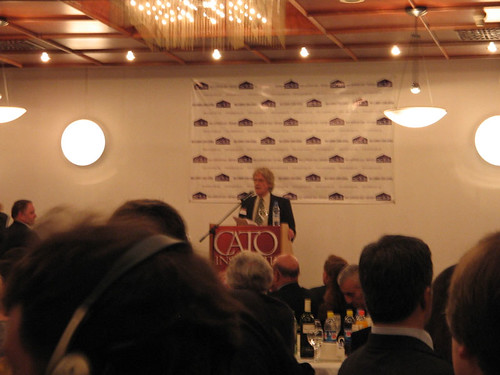
Freedom, Commerce, and Peace in Georgia

Vernon Smith
Sheraton Metekhi Palace, Tbilisi 25.10.2006
Speaker: Vernon Smith (Nobel Laureate in Economics)

Cato institute with cooperation New Economic School of Georgia
organised interesting conference: Freedom, Commerce, and Peace

Listen to Podcast about this Conference

Wednesday, October 18, 2006

Moulin Electrique


Visit new Art-Cafe in Tbilisi at Erekle II Str. 4/10

You will find their nice atmosphere with good musik and art performances. It's owned by group of artists (Keti Matabeli, Levan Chogoshvili) designed by young artist Giorgi Bandzeladze

Friday, October 13, 2006

Georgia vs Italy 1:3

Fisrt and only goal of georgian team.


Tuesday, October 10, 2006

Back in Tbilisi


At least I can post again from first and only (yet) WiFi Internet Cafe in Tbilisi at Rustaveli Avenue 18.
I will have soon DSL Internet and will resume blogging. For now thats all!

Friday, September 29, 2006

Contemporary problems of the Ukrainian Orthodox Church

Update: interesting discussion about this article on Ukrainian forum.


From June 20 to 27 of this year, Director of the “Center for the Study of Religious Issues” Vladimir Gogiashvili and the expert of the Center Archpriest Basil Kobakhidze visited Ukraine. In Kiev and Lvov they met with the leaders of various religious organizations, State and political figures and experts on religious issues in order to discuss the present state of the Ukrainian Orthodox Church.

Historical Survey

Since the baptism of Kievan Russ by Prince Vladimir in Xc. The Ukrainian Orthodox Church (Metropolitan see of Kiev) has been under jurisdiction of the Patriarchate of Constantinople and had in fact the wide self –governing rights. In 1593 The Patriarchate of Constantinople granted autocephaly to the Moscow Patriarchate while Kiev Metropolitan See remained under jurisdiction of the Patriarchate of Constantinople. In 1686, using the way of political pressure, intrigues and bribes, the Moscow principality forced the Patriarch of Constantinople Dionysius IV to hand over the Kiev Mitropolia to the Moscow Patriarchate. This was the reason why a some time later the Holy Synod of the Patriarchate of Constantinople removed the Patriarch Dionysius from the Patriarchal Throne.
In 1924 the Patriarch of Constantinople Gregory VII announced that the Patriarchate of Constantinople recognized the territory of the Moscow Patriarchate only within the geographical limits established in 1593. This meant that the Constantinople did not recognize the jurisdiction of the Moscow Patriarchate on the territory of Ukraine. The same claims were made by the Patriarch of Constantinople Dimitrios I in his letter to the Patriarch Alexei II in 1990. in March of 2005, the official representative of the Patriarchate of Constantinople Vsevolod (Maidanski) of Skopelos visited Ukraine and during his meeting with the President of Ukraine Victor Iushchenko he announced” “ The Mother-Church of Constantinople does not recognize the canonicity of the jurisdictional belonging of the Kiev Mitropolia to the Moscow Patriarchate.” According to the Canonical Tradition of the Orthodox Church, the Church whose missionaries have brought the Christian faith to another country or granted autocephaly (independence) to the Church of this country is regarded as a “Mother-Church” for the latter. The Church of Constantinople is a “Mother-Church” for the Moscow Patriarchate as well as for the Ukrainian Orthodox Church.
The “Ecclesiastical occupation” of the Church of Ukraine by the Russian Church has never been accepted in Ukraine. The attempts to withdraw from the jurisdiction of the Russian Church became especially active in 20th, 40th and 90th of XX century. In 1918 Ukrainians even asked the Georgian Church to ordain the bishops for their independent Church. The Georgian Church agreed but the Ukrainian candidates for episcopacy never reached Georgia because of the Civil War. Ukrainians remember this historical fact with gratitude until now.
On June 8 of 2005, the meeting took place between The Patriarch of Constantinople Bartholomaios I and the President of Ukraine Viktor Iushchenko. During the conversation the President Iushchenko mentioned that “presently the Ukrainian society looks forward to the creation of united, Autocephalos Orthodox Church.” In March of this year, in his speech made on the Assembly of the Party “People’s Union, Our Ukraine” President Iushchenko said: “I believe we will witness the creation of the autocephalous, Orthodox and united Church of Ukraine.”

Presently three Orthodox Churches function on the territory of Ukraine:

1) The Orthodox Church of Ukraine, under jurisdiction of the Moscow Patriarchate,. (later UOC-MP) The Head of this Church is Metropolitan Vladimir Sabodan is appointed by Moscow. This Church is officially recognized by other local Autocephalous Orthodox Churches in the World; it was an active supporter of Ianukovich during the elections and even urged the believers to vote for him. This Church is largest among other churches in Ukraine according to its membership and possesses a big property.

2) Ukrainian Orthodox Church – Kiev Patriarchate (later UOC-KP). The head of this Church is the Patriarch Philaret Denisenko.

3) Ukrainian Autocephalous Orthodox Church (later UAOC), the head of this Church is Metropolitan Methodios Kudriakov. This is quite a small Church comparing to other ones.

There exist also the marginal pseudo orthodox groups created by Russain secret services such as “the Patriarch of Kiev” Moses Kulik etc. They have no influence.

The UOC-KP and UAOC are not officially recognized by the other Autocephalous Orthodox Churches in the World. The Church of Metropolitan Vladimir Sabodan does not recognize them as well and calls them the schismatic churches. The Moscow Patriarchate defrocked and anathematized Patriarch Philaret Denisenko who had been one of the Candidates for the Patriarchal Throne for Moscow. The relations between the Church of Patriarch Philaret Denisenko and that of Metropolitan Methodius Kudriakov are friendly and they even negotiate about their unification. During the Ukrainian elections Metropolitan Methodius himself supported Ianukovich. It should be noted that after the death of Patrirach Demetrius Iarema the council of this church elected Metropolitan Constantine Buggan of the Ukrainian Orthodox Church in USA (under jurisdiction of the Patriarchate of Constantinople) as its head. The Metropolitan could not officially accept this position and Metropolitan Methodios Kudriakov was appointed the head of the Church. We may call this fact an unofficial entrance of the Ukrainian autocephalous Church under the jurisdiction of the Patriarchate of Constantinople.
The aim of the negotiations between the Kiev Patriarchate and the Ukrainian Autocephalous Orthodox Church is the creation of united, independent Orthodox Church of Ukraine. It should be noted that since the second half of 80th and the first half of 90th of the XX c. there have existed the Ukrainian Orthodox Churches under jurisdiction of the Patriarchate of Constantinople on the territory of North and Latin America, Europe and Australia. The head of the Ukrainian Orthodox Church of Diaspora and in the USA is Metropolitan Constantine Buggan and the Head of the Ukrainian Orthodox Church in Canada is Archbishop John.

Patriarch Philaret (Denisenko) of Kiev and all Russ-Ukraine: “Presently there is the fight for superiority between the Moscow Patriarchate and the Patriarchate of Constantinople. This year “at the World council of the Russian people” Metropolitan Cyril (Gundyaev) of Smolensk and Kaliningrad stated that the Orthodox countries are to be united around the Moscow Patriarchate in the same way as the Islamic countries are being united in the World Islamic Conference. That the Orthodox Churches should create united front around the Moscow Patriarchate. About five years ago the Patriarch of Moscow Alexis II stated that no theological arguments exist to prevent the Moscow Patriarchate to be the first among the other local Orthodox Churches since the Russian Church is the largest one and the Moscow city is the third Rome. In order to occupy the first and superior place the Moscow Patriarchate acts with the help and instructions of the Russian State. The Ukrainian Orthodox Church is an obstacle on the way of the Moscow Patriarchate claiming the primacy in the Orthodox world since it depends on the Ukrainian Church whether the Moscow Patriarchate will have claims for the first place (primacy) in the Orthodox World. The Ukrainian Church almost equals to the Russian Church by the number of its parishes. In case the Ukrainian Church will be granted autocephaly and withdraw from the jurisdiction of the Moscow Patriarchate the Moscow Patriarchate will become twice as small, weaker and will not be able to claim for the first place. The autocephaly of the Ukrainian Church will be a guarantee for the stability in the Orthodox World and the Patriarchate of Constantinople will remain the first among equals (primus inter pares), as it has always been according to the tradition. The Ukrainian Church will balance the life of the Orthodox Churches. The Moscow spreads dirty gossips to discredit my personality. At the meeting of the President Victor Iushchenko with the Patriarch of Constantinople Bartholomew it was said that the Patriarchate of Constantinople would send to Kiev it’s representative, bishop Ilarion (Rudnik) from the Orthodox church in Portugal(under jurisdiction of Constantinople). He has a Ukrainian background. Bishop Ilarion had to arrive first in Istanbul but while crossing the Turkish boarder he was arrested by the Turkish police with the charge of being Chechen terrorist. As Turkish police stated he received this information from the Russian secret services. Russian State does its best not to permit the recognition of the independence of the Ukrainian Church since it understands very well the great importance of this fact. The Patriarch of Moscow Alexis II stated that in case the Patriarch of Constantinople recognizes the independence of the Ukrainian Church the great schism is going to happen in the Orthodox World. It was not enough for the Moscow Patriarchate to split the Ukrainian Church now it wants to divide the Orthodox World. But if this happens only the Serbian and perhaps the Bulgarian but not the other Churches will support it.
It will be the fact of the extreme importance if the Catholicos-Patrirach of All Georgia Ilia II appeals to the Patriarchate of Constantinople and other Churches for the recognition of the Kiev Patriarchate in order to regulate the situation in the Orthodox Church in Ukraine. As time goes by Moscow becomes much stronger. Moscow creates alternative “Orthodox congregations” in Ukraine in order to make us weaker. At the same time it strengthens its influence throughout the World: joins the Russian Church abroad to the Russian Orthodox Church. The Russian Church abroad has its parishes all over the World. Moscow plans to establish the Metropolitan Province in the West Europe, opens a number of new churches at the embassies of various countries in order to enter into closer relationship with the governments of these countries etc. It is obvious that all these institutions will pursue a Russian policy.
We demand the Tomos of autocephaly from the Patriarch of Constantinople. We do not want to be either under jurisdiction of Moscow or Constantinople but we want to be granted an autocephaly. In the independent Ukraine there should exist the independent Orthodox Church. As soon as the recognition of the UOC-KP takes place the great majority of UOC-MP and UAOC will join us and the UOC-KP will have more than 8500 parishes which is a big power.
We think that in case the Pan-Orthodox Council will discuss the question of the independence of the Ukrainian Church. Moscow will start murk the water. It will use the diplomatic channels to disturb the process and to spoil the atmosphere at the Council. It would be better if the Patriarch of Constantinople openly recognizes our autocephaly. He has every right to do so. We have excellent relationships with UAOC; its clergy wants to join us. As for the bishops, they refrain from making open statements because of the political pressure from outside. However such unification has already started in the region of Ternopol. Everybody understands that Ukraine is an independent State and will never come back to Russia.
It would be very helpful if the Georgian Orthodox Church opens its representation (Podvorie-Rus. Metochion-Gr.) in Kiev, at the Kiev Patriarchate. Besides, Georgian priest could also be appointed in the Georgian Embassy in Ukraine. He would play an important role in the solution of the problem of the Ukrainian Church.”


Alexander Sagan, the academic advisor of the President of Ukraine in religious matters: “The Orthodox Church is in a quite difficult state in Ukraine and we ought to be very careful while trying to regulate the situation. The State officially does not interfere in this... The believers themselves must take an initiative. The statement of the Archbishop Vsevolod (Maidansky) of Skopelo about the fact that the Patriarchate of Constantinople does not recognize the Ukrainian Church as a canonical territory of the Moscow Patriarchate is very important. We think that the unification of the UOC-KP and the UAOC will take place this year which itself is a positive fact. Bishops of UAOC ask for guarantee that after the unification of these two churches they will not loose their positions. The commissions are being created on the matter of this unification. The personality of the Patriarch Philaret is not a hindrance to this process of unification. In 2000 the attempt was made to unite these Churches. The representatives of UOC-KP and UAOC met in the Patriarchate of Constantinople and signed the declaration but because of the pressure from the government at the time the process of unification failed. We expect the completion of this process in September-October. The President Victor Iushchenko suggested the Patriarchate of Constantinople to open the representation in Kiev. After the recognition of independence of the Ukrainian Church the majority of Ukrainian believers will become the members of this church. Only the small exarchate will remain under the Russian jurisdiction which obviously will not create any problem. The independence of the Ukrainian Church is the matter of the State security. For instance, let us consider the institute of military priests. Presently all military priests belong to the UOC-MP. This Church signs agreement with armed forces and the priests go to soldiers and policemen. But these priests belong to the Moscow patriarchate and pursue a Russian policy. The Russian Patriarch Alexis II signed also the agreements with all military institutions. It could be acceptable to allow these priests to visit jails and hospitals but what are they going to teach soldiers and policemen? We all saw their actions during the period of elections. Even today they openly state that they are against the integration of Ukraine in NATO and European organizations. So, this is the matter of National security. Besides, several million Ukrainian Orthodox believers are distressed because nowhere throughout the World are they recognized as a members of the Church. After we won in the elections no repayment from our side towards the UOC-MP has taken place but the endurance has also its limits. They announce that Ukraine fell into Satan’s hands and call people for separatism. We should try to restrain them. The dignity of the President is inviolable and the call for the division of the country is a crime. We believe that after the unification of the UOC-KP and the UAOC this Church will be granted autocephaly. There will be scandal and pressure from Moscow since many parishes of UOC-MP will join the autocephalous canonical church. If the recognition of autocephaly will take place this year or the next year it will be excellent for the delaying of this process will have a negative effect. We expect the incitement of the economic problems from Russian side similar to those in Estonia when the Patriarchate of Constantinople recognized the autocephaly of the Estonian Church in 1996. Estonians did their best to face theses problems since they were very well aware what the Moscow Patriarchate represented itself. We expect that some sort of destabilization process will be incited in Ukraine in order to diminish the actuality of the issue of the independence of the Ukrainian Church and to end it eventually. The President Iushchenko has a very clear vision of this situation.
It will be very difficult to attain the recognition of the autocephaly of the Church of Ukraine. We know very well the attitude of the Ecumenical Patriarch. It could be said that he needs the independence of the Ukrainian Church more than we do. This is the reason why he fully supports this idea. The Russian Church will confront us. The Moscow Patriarchate and the KGB are the same. That is why the Patriarch Bartholomew needs support. It will be ideal if the Georgian Patriarchate appeals the Patriarch of Constantinople and the heads of the Orthodox Churches for the independence of the Ukrainian Church. This would be an immense help for Ukraine. The opening of the representation of the Georgian Patriarchate in Kiev would play an important role in solution of many problems of the Church of Ukraine. The personal qualities of the representative himself will also be very important since the Russian secret services will try to put pressure on him. I think that the idea of the opening of the representation should be suggested directly to the Patriarch Alexis of Moscow. The idea of the convening of the Pan-Orthodox council concerning the Ukrainian question will be echoed positively. The fact of convening of the council of such a high rank is very important but proper preparation for the council is also necessary. I am ready to visit Tbilisi for the consultations on every level.


Priest Peter Zuev (Ukrainian Orthodox Church - Moscow Patriarchate): The situation in the church in Ukraine is absolutely abnormal. UOC-MP is not able to unite the Ukrainian Orthodox believers. After the “Orange Revolution” the society demands autocephalous canonical Church. The unification of the Orthodox Churches in Ukraine can be based only on the canonically recognized autocephaly. The UOC-MP cannot be granted autocephaly since its episcopate is entirely under the Russian influence. They will never demand independence openly although deep down in their heart more than half of them support autocephaly because they know that Ukraine will never become part of Russia.
On the first stage The Church of Ukraine may be granted Autonomy under the jurisdiction of the Patriarchate of Constantinople. It could be granted to the bishops of UAOC who have been canonically ordained. The Patriarch Philaret makes every effort that autocephaly be granted to his church. The Patriarchate of Constantinople will play a leading role in this process. If the Georgian Patriarchate supports our Church in this matter the Ukrainian people will never forget this. The Catholicos-Patriarch Ilia II could address both the Patriarch of Constantinople Bartholomew and the Moscow Patriarch Alexis and indicate that the Church in Ukraine is in a very difficult state. Every third parish is schismatic and this is horrible. The Patriarch Ilia II could call for the unity according to the Gospel. The Moscow Patriarchate does not want to let the Ukrainian Church go. The Patriarch Alexis II does not want to enter the History as an author of such a wise decision.
The Pan-Orthodox Council can play a very important role in the solution of the Ukrainian Church problem. The Moscow Patriarchate tries to maintain the empire similar to the USSR but times are different now. They will not be able to maintain the Empire. Quarrels among the Orthodox churches discredit the Church in Ukraine. Metropolitan Vladimir Sabodan (UOC-MP) is an inert personality. His health is seriously damaged. Bishop Sophrom of Cherkask openly supports the autocephaly. The official representative of the Patriarchate of Constantinople Archbishop Vsevolod (Maidanski) of Skopelos is very good theologian and the Patriarch of Constantinople Bartholomew charged him with a mission to make his famous statement.
The positive effects of the opening of the representation of the Georgian Patriarchate in Kiev are manifold: for instance in making contacts. I think the request for the opening of the representation should be sent to Metropolitan Vladimir Sabodan where it is to be indicated that the Patriarch Philaret has a Georgian priest and is plans to establish Georgian parish under his jurisdiction. This will give a stimulus to the Metropolitan Vladimir to approve this. We can provide the representative with the church and housing. It would be good if the representative himself brings the letter of request to Kiev and waits for an answer here. In this case he will have an opportunity to start his work immediately even before he receives an answer. The personal qualities of the representative are of a great importance since the UOC-MP knows many ways to bribe or frighten him.
After the recognition of the autocephaly of the Church of Ukraine it would be good if any bishop with Ukrainian background from America or Canada will be appointed head of this church.”


Mr. Vladimir Stretovich, Head of the Christian-Democratic Union, Chair of the committee in Rada against organized crime and corruption: “Michael Saakashvili is an excellent President. We are excited by his attitude towards Russia. We should learn a lot from him. The recent statement made by Archbishop Vsevolod (Maidanski) of Skopelo about the fact that the Patriarchate of Constantinople does not recognize the joining of the Kiev Mitropolia to the Moscow Patriarchate and that the jurisdiction of the Moscow Patriarchate on the territory of Ukraine is not canonical has a historical importance. Now the bishops of the Orthodox Church in Ukraine need to seat around the round table and negotiate how the Patriarch of Constantinople Bartholomew could possibly grant them an autocephaly. Historically the Georgian Orthodox Church went through the similar situation. The president Victor Iushchenko plans to meet with the bishops of the UOC-MP very soon. These bishops say they are not enemies and if the President listens to them they will support him altogether It is most important if the government makes the first step towards this since the bishops of UOC-MP are also Ukrainians and patriots of their country. We had a conversation about it already three years ago with Metropolitan Vladimir Sabodan (UOC-MP) who fought for the independence of Ukraine when he was young. Recently the relationship between him and the Patriarch Philaret Denisenko became warmer. Everybody understands that the recognition of the aautocephaly of the Church of Ukraine is an irreversible process. The appeal of the Catholicos- Patriarch will make the issue of the Church of Ukraine actual that is very helpful. As many Church representations are opened in Kiev as better it will be. Naturally the representation of the Georgian Patriarchate can bring a very positive impact to us. If the Pan-Orthodox Council convenes concerning the Ukrainian Church issue you may consider this problem mainly solved.”
Mr. Michael Kosiv, head of the religious sub-commitee in Rada: “The situation is very difficult. We have inherited divisions in the Church. Our only hope is the Patriarch of Constantinople Bartholomew I. Archbishop Vsevolod (Maidanski) of Skopelo was in Kiev in March and on behalf of the Patriarch of Constantinople he announced that he doe not recognize the jurisdiction of the Moscow Patriarchate on the Ukrainian territory. This announcement is extremely important for us. There was an attempt made by UOC-KP and UAOC to join the Patriarchate of Constantinople together but this process failed. The granting of the status of the Patriarchate to the Church of Ukraine is also a problem but according to the history since the Church of Kiev is the “Mother-Church” for the Church of Moscow which presently itself has a status of Patriarchate then this status belongs to the Church of Kiev as well. The bishops should forget their arrogance and unite. The fear of the Moscow Patriarchate is also to be overcome since it cannot do much harm to us. The appeal of the Georgian Patriarch to the Patriarch of Constantinople will be a great stimulus for the latter to recognize finally the autocephaly of the Church of Ukraine. We do not need too many formalities in the relationship with the Moscow Patriarchate we should rather negotiate as equal parties. As soon as the canonical recognition of the Orthodox Church of Ukraine takes place the great majority of the Orthodox believers will join this Church. The majority of the bishops of the UOC-MP will also join this Church since they are pragmatic people and know that at least five more years or may be ten, Victor Iushchenko will be a President. It does not matter under whose jurisdiction the representation of the Georgian Patriarchate in Kiev will be. The existence of this representation itself is most important. Besides, there are many Georgians in Kiev and they need to attend the liturgy served in their mother tongue.
Metropolitan Andrew Gorak of Lvov and Sokal (Ukrainian Orhtodox Church – Kiev Patriarchate):
I pray to God for the appeal of the Catholicos-Patriarch Ilia II to the heads of the Orthodox Churches to persuade them to pay attention to the Ukrainian Church problem. But a lot depends on the Patriarch of the Russian Church. The Georgian Church has already gone through this Golgotha. You where united but you had been waiting for the recognition of your autocephaly for 26 years (1917-1943). The solidarity among the Orthodox people is needed. Estrangement and distrust should be overcome.
I cannot even dream about Pan-Orthodox council concerning the Ukrainian Church problem. It would be just to invite the representative of the UOC-KP to the council rather than considering our matter without our presence. Inviting us to the council will show that they consider us as an equal party. The preliminary consultations held with the Patriarch of Constantinople are also necessary. First of all the Council should evaluate the ecclesiastical-canonical state of the UOC-MP. In the Orthodox canonical tradition there exist either autonomous or autocephalous churches while the Moscow Patriarchate presents the UOC-MP as some kind of “self governing” church. What does this mean? This is a new invention and in fact does mean anything. The UOC-MP is just one of the obedient dioceses of the Moscow Patriarchate. 40 years have passed already since the Macedonian Orthodox Church (Macedonia, the former republic of Iugoslavia) demands to be granted autocephaly but with no result. I am surprised that Orthodox people do not learn from the lessons of the history. I visited Constantinople twice as a member of our Church delegation but there has not been any result yet. The visit of the President Iushchenko to Constantinople gives us hope that the solution of the problem will get started and here the actions taken by the Georgian Patriarch will be of a great value.
The Patriarchate of Constantinople plans to open it’s representation in Kiev. If the Georgian Patriarchate also opens it’s representation it will be a significant break through. It does not matter under whose jurisdiction will the representation be but most important is what the representative himself will do and what instructions will he carry out.


Archpriest Oleksa Petriv, Director of the bureau for the relations of the Greek-Catholic Church in Ukraine with the Ukrainian Government:
Historical facts: In 1596 the great majority of the Orthodox bishops of Kiev Metropolitan See joined the Roman-catholic church while maintaining the Orthodox liturgical and traditions. This Church has a legal autonomy in the bosom of the Catholic Church and is called Greek-Catholic or Uniat Church. In 1944 Stalin abolished the Greek-Catholic church of Ukraine and went underground until the 90th of XX c. officially this Church had dioceses only in the Europe and the USA. Since 1990 the Church has been restored on the Ukrainian territory. Presently this church counts more than 4 000 000 believers.

“We, Ukrainian Greek-Catholics, being patriots of our country entirely support our Orthodox brothers in their struggle for the independent church. Sooner it happens better it is since such a disorder cannot be tolerated any more. I think the unification of the Orthodox churches in Ukraine should be the first step towards the Church independence. It is obvious that not all will join the united Church and the Russian Church will maintain a small exarchate. According to the Archbishop Vsevolod (Maidanski) of Skopelo, Ukraine is the canonical territory of the Patriarchate of Constantinople and the Moscow Patriarchate does not have any rights here. The joining of the Kiev Metropolitan See to the Moscow Patriarchate in 1686 was not canonical. If the Georgian Patriarch makes an appeal to the Patriarch of Constantinople concerning the question of the Church of Ukraine, all positive effects of this action will be hard to imagine. The convention of the Pan-Orthodox council in order to solve this problem is very important. In my opinion, year ago the Moscow Patriarchate could manage that the resolution of this council be in its favor but now the situation changed. This council will show that the Ukrainian Church issue is important for the Orthodox Church in the World. Now there is a unique chance for the unification of the Orthodox Churches in Ukraine and for the recognition of this independent Church by the Orthodox World. The Georgian Patriarchate could also participate in negotiations among the Orthodox Churches of Ukraine. The opening of the representation of the Georgian Patriarchate in Kiev will facilitate to this process. I think the request for the opening of the representation should be made to the Metropolitan Vladimir Sabodan (UOC-MP) and not to the Patriarch Alexis II. Obviously the position of our government will be of a crucial importance in this case.


Priest Iuri Boiko (UAOC), deputy of Rada:
“Our strategic goal is to create the united, independent Church of Ukraine. The attitude of the Patriarch of Constantinople towards this problem gives us hope but he has to take into consideration the imperialistic traditions of the Moscow Patriarchate. The Patriarch of Constantinople does not want the international conflict to happen in the Orthodox World and here the support of a neutral Georgian Patriarchate will be very helpful. The initiative of the Georgian Patriarch would give a stimulus to the Patriarch of Constantinople to convene the Pan-Orthodox council concerning the Ukrainian Church issue. At the meeting of Rada I addressed the President Iushchenko with the speech where I indicated the necessity and importance of the opening of the representation of the Georgian Church. The representation will be under jurisdiction of the Catholicos-Patriarch of all Georgia ilia II. Besides, many Georgians live in Kiev and they need an Orthodox-spiritual Center too. The representation could even be opened at the Georgian Embassy in Kiev. The personality of the Patriarch Philaret (Denisenko) is a hindrance to the process of our unification with UOC-KP. However the priests and bishops of our churches are friends with each other. We are also friends with the clerics of the UOC-MP. Now we face the problem of legitimacy. The opinion that only UOC-MP is legitimate is not correct. Both, the society and the government should be aware of this. The fact that the President Victor Iushchenko invited the Patriarch of Constantinople Bartholomew I to Ukraine is extremely important. The aim of our autocephaly is to achieve the sanctity and the independence of the Church with the clerics with high moral standards. Before the Orange Revolution we saw how the Church was financed by the State officials and the representatives of the criminal circles. And we know that he who pays piper calls the tune.
The independent Church is necessary for our national self-identity and it will prevent using the Orthodox Church against the Ukrainian interests. Look what the priests of the UOC-MP preached during the period of elections! Now they behave the same way against the process of democratization of Ukraine and its integration in the European organizations.


Mr. Gregory Comendant, President of the Evangelical-Christian Baptist Federation of All Ukraine:
“It is necessary for the Ukrainian Orthodox Church to be autocephalous. We support this idea altogether. We successfully collaborate with our Orthodox brothers in the Ukrainian Church Council and are in a very good terms with them. Many think that the personality of the Patriarch Philaret is a hindrance to the process of unification of the Orthodox churches in Ukraine. However he is a strong personality and has a talent for organization. The majority of clergy and parishioners in the UOC-MP are not content with the situation in the Church and will immediately join the canonical Orthodox Church. In my opinion more realistic will be to enter first under jurisdiction of the Patriarchate of Constantinople and then to be granted autocephaly. We know that the question of the canonical independence of the Orthodox Church of Ukraine is of a vital interest for the State authorities as well.
Professor Dimitri Stepovik, the member of the highest ecclesiastical council of the Kiev Patriarchate: “Besides being the member of the highest ecclesiastical council of the Kiev Patriarchate I am also a professor of the Kiev Theological Academy. We expect much from the President Iushchenko. The Kiev patriarchate is a truly patriotic church. The policy of our President concerning the church has not entirely met our expectations yet. All know very well that the Moscow poisoned him and after his inauguration he immediately went to Moscow. He could at least announce that he had to go there because of the political and economic pragmatism but he never said anything like this. The time already has come for Ukraine after going through long-suffering to have finally its own independent church. For us the appeal of the Catholicos-Patriarch of all Georgia to the Patriarch of Constantinople will be God’s blessing and the true sign of fraternity. It is necessary to open the representation of the Georgian Church at the UOC-KP. For the beginning this may not be an official representation, for instance they could send here one religious journalist. He will be able to get an objective information right at the place and understand real circumstances himself. An exchange of unofficial visits is also necessary. The delegation of our church will visit you not to participate in the liturgy but for getting know each other and making contacts. We ask the Georgian Patriarchate to advocate the UOC-KP before the Orthodox churches in the World. Your unofficial representative may even live in the Kiev Theological Academy, say for three months and take the objective information to Tbilisi.
The Russian secret services work intensively. In 1992 disguised agents arrived together with Metropolitan Vladimir Sabodan and occupied the Lavra of Kievo-Pechora. The Patriarch Philaret did a tremendous work to maintain the patriotic church since the tricks of enemy were many and still is.
The Pan-Orthodox council should recognize the autocephaly of UOC-KP and 99% of the UOC-MP will immediately join us. If you help us in this we will remain your loyal friends forever.


Archpriest Sergei Stankevich, journalist (Ukrainian Orthodox Church, Kiev Patriarchate): The schisms in the Orthodox Church in Ukraine are caused by external forces. It is necessary for our Orthodox brothers to forget political and pragmatic purposes and give a dogmatic and ecclesiastical-canonical evaluation to the situation in the UOC-KP. Until now we hear only hysterical journalistic announcements. Patriarch Philaret of Kiev has been the Patriarch for more than 40 years. He held high hierarchical positions in the Moscow Patriarchate. He was a locum-tenens of the Moscow Patriarch and one of the real candidates for the Patriarchal throne. He ordained Metropolitan Vladimir Sabodan (UOC-MP) and now the latter tries to discredit the Patriarch Philaret. The only argument of the UOC-Mp is that Ukrainian people are not ready for the autocephaly(!?). The See of Kiev is much older than that of the Moscow and if we speak about the canons and tradition then the Moscow Patriarchate should be subordinated to the Kiev Patriarchate. The dogmatic and theological dialogue concerning the recognition of the Kiev Patriarchate is necessary with other Orthodox Churches. .According to the number of its believers Ukraine is largest Orthodox nation in the World! The initiative group including theologians and canonists from Orthodox Churches is to be created for studying the canonical statute of our church. When in XIX c. the Orthodox Church in Greece announced it’s autocephaly it took 17 years for the Patriarchate of Constantinople to recognize the autocephaly of the Greek Church.
The Georgian Church could help us in many ways to leave the Moscow Patriarchate. The appeal of the Georgian Patriarch will be a unique one: The whole world will see that Ukrainians are not alone and somebody has raised the voice to defend us. The convening of the Pan-Orthodox council to discuss the Ukrainian problem is necessary. We need to introduce dogmatic, theological and canonical arguments to this council. The opening of the representation of your church in Kiev would be an excellent fact and it will show the World your position. The request for the opening of the representation should be sent directly to the Patriarch Alexis. Metropolitan Vladimir Sabodan is a ruler of just one of the dioceses of the Russian Church. Russia used to interfere in the internal affairs of our State through UOC-MP.”


Mr. Andrew Iurash, Religious expert, Professor of the Lvov National University:
“It is necessary to state the Ukrainian Church question on all levels. Such an attempt has never been made in the bosom of the World Orthodoxy yet. If the Georgian Church states this question, it could be said that the problem is more clearly and objectively seen from outside. In any case, not all Orthodox will unite in Ukraine. If the autocephaly will be recognized the majority from the UOC-MP will join the independent Church while the rest of it will create the diocese of the Russian Church that will not be any problem. This will be so called Estonian variant where two canonical Orthodox Churches exist on the same territory. In the South-East regions of Ukraine many clerics can’t imagine their life without the Moscow Patriarchate. Metropolitan of Odessa Agathangelos (Savin), who is quite an odious person, is an expression of their spirit. As for the clerics in the West regions of UOC-MP, the majority of them will immediately join the canonical autocephalous Church since these are pro-Ukrainian regions. The sequence in the process of granting autocephaly should be kept: first the autonomy under the jurisdiction of the Patriarchate of Constantinople and then autocephaly. As soon as the independent, recognized will appear the regrouping of the forces will start in the UOC-MP: there are some bishops in that church who openly support autocephaly, for instance bishop Sofrom of Cherkask, bishop Nyfont of Volin and etc. I think the great majority of UOC-MP, UOC-KP and UAOC together should create canonical autocephalous Church. The State Authorities play an important role in this process. At the time of the President Leonid Kuchma the State does not do anything in this direction. On the contrary, Kuchma tried to restrikt the UOC-KP. He was in good terms with UOC-MP and his wife actively participated in the political life of this Church. Presently UAOC is in very difficult state. It is almost disintegrated but its decay is prevented by Russia since it wants to say afterwards: there are two of you (UOC-KP and UAOC) whom we are to talk to? The Ukrainian State is supposed to help all these churches and a forceful “Ukrainization” is unacceptable.
The appeal of the Patriarch of Georgia to the Patriarch of Constantinople and the heads of other Orthodox Churches will have many positive effects: 1. the actualization of the Ukrainian church problem on a large scale and a high level will take place; 2. The fact that somebody in the World Orthodoxy paid attention to the Ukrainian believers while even the Orthodox Church in Poland, our closest neighbor is silent, will be a strong impact for other Orthodox Churches.
The Pan-Orthodox council concerning the Ukrainian church problem is itself the fact of a greatest importance since such a council has never been convened because of our Church. Some will say that The Ukrainian Church problem is an internal affair of the Moscow Patriarchate but as the history teaches us and as it was announced by Archbishop Vsevolod of Skopelo the jurisdiction of the Moscow Patriarchate on the territory of Ukraine is not canonical. The Patriarch of Constantinople charged him with the mission to make this announcement. The Announcement was made to see the reaction of the Moscow Patriarchate. In response to this, the Patriarch Alexis announced that the Moscow Patriarchate may make a schism within the Orthodox Church as it was the case when the problem of the Estonian Church rose but it will be a dead end for the Moscow Patriarchate. Now, the Patriarch of Constantinople needs support to take a decisive step. Such a supporter could be a Georgian Patriarchate. This is to be done rapidly otherwise Moscow Patriarchate may itself grant autocephaly to the Ukrainian Church under certain conditions (the church leadership will be appointed by the Moscow Patriarchate and etc.) and in result we will have a pro Russian Church which rather than balancing the World Orthodoxy will destabilize it. This will have an effect on the geopolitical situation. It is necessary for us to be granted autocephaly by the Patriarchate of Constantinople.
The Georgian Patriarchate may play an important role in resolving Ukrainian Church problems on the inner Ukrainian scale as well. Since 1917 The Ukrainian Orthodox believers have been hoping that their bishops would be ordained in Georgia. Because of technical reasons their hopes were not realized but kind and warm feelings towards the Georgian Church remained. The opening of the Georgian Church representation will advance the ecclesiastical level and the presence of the Georgian priest will have a positive impact there. The representative may organize informal meetings among the clerics of the Orthodox churches, round tables, conferences and dialogues. This will be a kind help from the neutral party.”
From July 16- to July 20 of 2005 Mr. Vladimer Gogiashvili, the director of the “Center for the study of Religious Issues” and Archpriest Basil Kobakhidze, the expert of the Center visited Constantinople (Istanbul) where in the Patriarchal Church of St. George they attended the Holy Liturgy. They also had an audience with His All Holiness Ecumenical Patriarch Bartholomew I and the chief secretary of the Holy Synod of the Ecumenical Patriarchate Archimandrite Elpidophoros Lambrianidis.


Bartholomew I, Archbishop of New-Rome and the Ecumenical Patriarch: “I think, besides the contemporary situation of the World Orthodoxy the “Center for the Study of Religious Issues” should also work on the future perspectives of its development.
The Mother-Church of Constantinople who is the Mother Church for the Ukrainian Orthodox as well is very pained and concerned about the situation of the Church of Ukraine. During the recent years we have been making all efforts to regulate the situation in the Orthodox Church in this Country which has already attained the political independence. During the visit of the President Iushchenko in Constantinople I met him twice, first in his Hotel and then here, in the Patriarchal Residence. We talked about the ways for the definition of the future canonical statute of the Ukrainian Orthodox Church. The state of the Church in Ukraine is very difficult and there are some forces who want it to be more difficult. During the years we have been trying to cooperate with the Moscow Patriarchate on this matter but the Russian Church does not want the Ukrainian Orthodox Church to have any real independence.
The Mother-Church of Constantinople does want to unite all three Orthodox Churches in the Ukraine and then to grant the canonical statute to this Church. We will see whether this is going to be an autonomy first and then a full autocephaly or direct autocephaly.
As for an appeal of the Catholicos-Patriarch of all Georgia Ilia II to me concerning the question of the Ukrainian Orthodox Church and the convening of the Pan-Orthodox Council on the same question, The Mother-Church of Constantinople will be happy to receive any kind of support especially from such an ancient Church as is the Georgian Patriarchate.
After granting the Ukrainian Orthodox Church an autocephaly, the Mother-Church of Constantinople will call all other autocephalous Churches for the brotherly acceptance of the Ukrainian Church among them and for establishing a full Eucharistic communion with Her.
It should be noted that the opening of the representation of the Georgian Church in Kiev, which I think is reasonable, will create a problem in your relations with the Russian Church. However I have already become accustomed that my name in Russian journals and newspapers is being mentioned in a negative context. I think the representation of your Church may play certain positive role in the situation of the Orthodox Church in Ukraine.
I am an old friend of Georgia and have visited your country many times. I have always been amazed with the faith and hope of your people in God. However, unfortunately there exists a danger of fundamentalism but we think the reforms which the new Government carries on after the “Rose Revolution” and the openness towards the Europe will neutralize this problem to some extent. I am very happy with the position of the New Government of Georgia which supports the integration of Turkey in the European Union. I have said many times and I am saying it now that the European Union is unimaginable without Turkey and vise versa, the development of Turkey is unimaginable without the European Union.
In February of 2006 in Porto- Allegre (Brazil) the 9th General Assembly of the World Council of Churches will be held. I think, the Georgian Church should necessarily return to the Ecumenical Movement, at least as an observer. It is impossible that the Georgian bishops may be against the return of Georgia to the international arena. I know the problems of Georgia including the Church problems in Abkhazeti and Osetia. An isolation from the international Christian family will not do any good to your Church especially now, when the World Council of Churches took into consideration the demands of the Orthodox Churches and carried on an administrative changes. According to these changes the resolutions of the Council will be based not on the majority of votes as it used to happen before but on the consensus.
It will be good if the “Center for the Study of Religious Issues” will work on these issues as well. Let us keep in touch; we are interested in the results of your research work.

The conclusion

As a consequence of the consultations held the following conclusions have been outlined:
1. As the Ukrainian State authorities, society and faithful believe, the existence of an independent Ukrainian Orthodox Church recognized by the World Orthodoxy is necessary. The existence of quite a large Orthodox Church on the Ukrainian territory under the jurisdiction of the Moscow Patriarchate threatens the State and national interests of Ukraine and prevents the process of democratization of Ukraine and its integration in NATO and European Organizations.

2. The canonical recognition of the independence of the Orthodox autocephalous Church of Ukraine will considerably decrease the number of the members of the latter and weaken its aggressive actions, including those towards Georgia. The existence of the Ukrainian autocephalous Orthodox Church will be a clearly positive factor in the life of the Orthodox Churches in the World.

3. Ukraine is waiting for the active help from Georgia in this matter: a) an appeal of the Catholicos-Patriarch of Georgia to the Patriarch of Constantinople and the heads of other Orthodox Churches concerning the settlement of the Ukrainian question; b) The Georgian Patriarch should initiate the idea of convening the Pan- Orthodox council concerning the Ukrainian question (only the Patriarch of Constantinople has right to convene such a council) d) the representation of the Georgian Patriarchate should be opened in Kiev as a sign of respect towards the Orthodox Church in Ukraine and to make a positive impact on the negotiations among the Orthodox churches in Ukraine.

4. There is a need for the rapid actions since the Moscow Patriarchate itself may grant independence to the Church of Ukraine under certain conditions (the church leadership will be appointed by the Moscow Patriarchate and etc.). Consequently, instead of the strong church with positive attitude towards values common to all mankind we will have a huge pro- Russian church which will become the factor of destabilization in the World Orthodoxy. It will also be a hindrance to the process of the democratization of Ukraine and its integration in NATO and the European organizations.

According to the canonical tradition of the Orthodox Church the Patriarch of Constantinople is the first among equals (Primus inter pares – Lat.) (Ecumenical Council of Chalcedon, canon 28). He does not have an administrative power over other autocephalous Churches similar to that of the Pope of Rome. The Patriarch of Constantinople enjoys only the primacy of honor and other privileges which are as follows: His name is placed first in Diptych (list of the names of the Heads of the Orthodox Churches), he has a right of convening of the Pan-Orthodox Synods and to preside on these synods (last time such a synod took place in Istanbul, on May 24 of 2004), to initiate theological dialogues with non-Orthodox Churches and other religions and to lead these dialogues. There were many cases when Patriarch of Constantinople convened the Pan-Orthodox synods in order to settle the crisis brought up in various Orthodox Churches. For instance the Pan-Orthodox Synod of May 24 of 2005 considered the crisis in the Patriarchate of Jerusalem and the Synod in Sophia in 2000 settled the crisis existed in the Church of Bulgaria. So, Patriarch of Constantinople has an absolute legitimacy to convene the Pan-Orthodox Synod concerning the crisis in the Ukrainian church but taking into consideration the factor of the Moscow Patriarchate he has not done it yet. Obviously he needs a reason for taking an action.
This is where a neutral and authoritative Church could play a great role by addressing the Patriarch of Constantinople and other Orthodox Churches with open letter and asking them to take steps towards the settlement of the Ukrainian Church problem. The Georgian Orthodox Church and the Catholicos-Patriarch Ilia II as Her head could play such a role.
The arguments could be as follows: the considerable number of believers of the Ukrainian Orthodox Church is in a difficult position since their Church is not recognized by other Orthodox Autocephalous Churches in the World. This fact causes tension and conflicts among Ukrainian Orthodox. As for the other considerable part of the Ukrainian faithful, they are under jurisdiction of another country that is contrary to the Church tradition which states that the Church of an independent country is to be autocephalous (Canon 17 of the Ecumenical Council of Chalcedon and canon 38 of the Council of Trullo state this). This is the reason why the Ukrainian Orthodox people have rights to have their own independent Orthodox Church. Georgia also experienced the Russian “Ecclesiastical occupation” with its grave consequences and that is why it is especially compassionate towards its Ukrainian brothers. The Patriarchate of Constantinople enjoys a privilege to initiate the launching of the process of granting autocephaly to the Church of Ukraine. That is why the Catholicos-Patriarch of all Georgia Ilia II should appeal him openly for the convening the Pan-Orthodox Synod concerning the Ukrainian question. The Catholicos-Patriarch Ilia II may address the Orthodox Churches in Ukraine and offer an assistance of the Georgian Orthodox Church playing a role of an intermediary in the process of a dialogue among them. The Catholicos-Patriarch Ilia II may open the representation of his Church (Metochion) in Kiev. This is fully in accord with the canonical tradition of the Orthodox Church. There exist many such representations nowadays. The representation of the Georgian Orthodox Church in Kiev may be established at the Georgian Embassy in Ukraine. It may enjoy rights of canonical ex-territory that means it will be under direct jurisdiction of the Catholicos-Patriarch Ilia II. This representation may play an effective role especially when the idea of opening of the representation of the Georgian Orthodox Church is being supported by the great majority of the Ukrainian clergymen. Another positive effect of such steps taken by the Catholicos-Patriarch Ilia II will be an aggressive critique of the Georgian Church by the Moscow Patriarchate in Russian secular and Church press. This will show one more time the Georgian Orthodox clergy and faithful, still being pretty much influenced by the ideology of the Russian Orthodox Church, an imperial longings of the Moscow Patriarchate.

Chairmen of the Center for the study of religious issues
Vladimir Gogiashvili
Archpriest Basil Kobakhidze, expert

Source: Centre for the study of religious issues